
Our Heritage
We trace our history in the modern era to the Protestant Reformation of the 1500’s, and specifically back to the Reformed Church that was established in the Netherlands in that time. In the sections below, we will briefly outline some of the key events and time periods that proved formative.
The Protestant Reformation in the Netherlands (1530-1600)
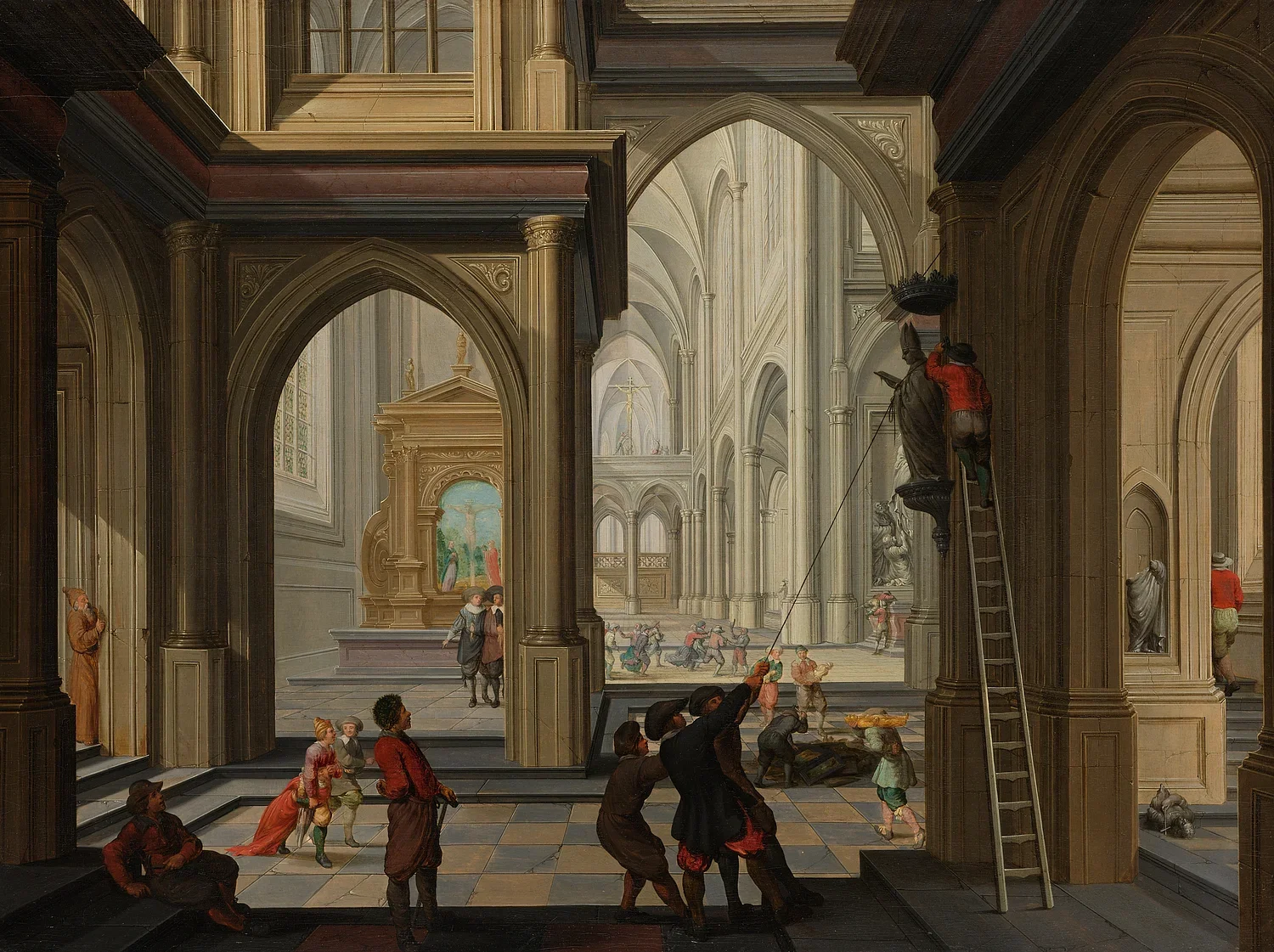
Most trace the beginning of the Protestant Reformation that swept Europe in the 1500’s to Martin Luther nailing the 95 theses on a door in Wittenberg, Germany on October 31, 1517. It took additional time for the Reformation to arrive in the Netherlands in earnest. While other nations had leading Reformers, such as Luther in Germany, William Tyndale or Thomas Cranmer in England, John Knox in Scotland, or John Calvin in France and Switzerland, in the Netherlands it was a popular movement without any major clerical figureheads. At first, there were factions of Catholics, Lutherans, Calvinists, and even Anabaptists in the Netherlands struggling against each other, but over time the two main rivals that emerged would be the Catholics, predominately in the Southern Netherlands, and the Calvinists (Reformed) concentrated in the Northern Provinces of the Netherlands. Persecution from Phillip II, the devoutly Catholic Spanish king who had inherited his rule over the Netherlands, against the Reformed people in the Netherlands was severe. In 1566, a wave of Protestant backlash to the intense persecution culminated in the widespread destruction of idolatrous images and statues in Catholic churches. This religious tension led to the start of the Eighty-Years War, where the Dutch fought for independence from Catholic Spain. The Dutch Reformed Church would hold its first national synod in 1571, embracing the Belgic Confession of Faith and the Heidelberg Catechism as its confessional standards. The leader of the Reformed cause in the Netherlands at this time was not a clergyman, but a prince, and his name was William of Orange. William would spend years fighting desperately against the overwhelming power of the Spanish Empire, and would die to an assassins bullet in 1584. But the Lord had used him for the defense of His people in the Netherlands, and the cause for independence from Catholic rule and persecution would be won after much struggle.
The Synod of Dort and the Dutch Further Reformation (1600-1750)
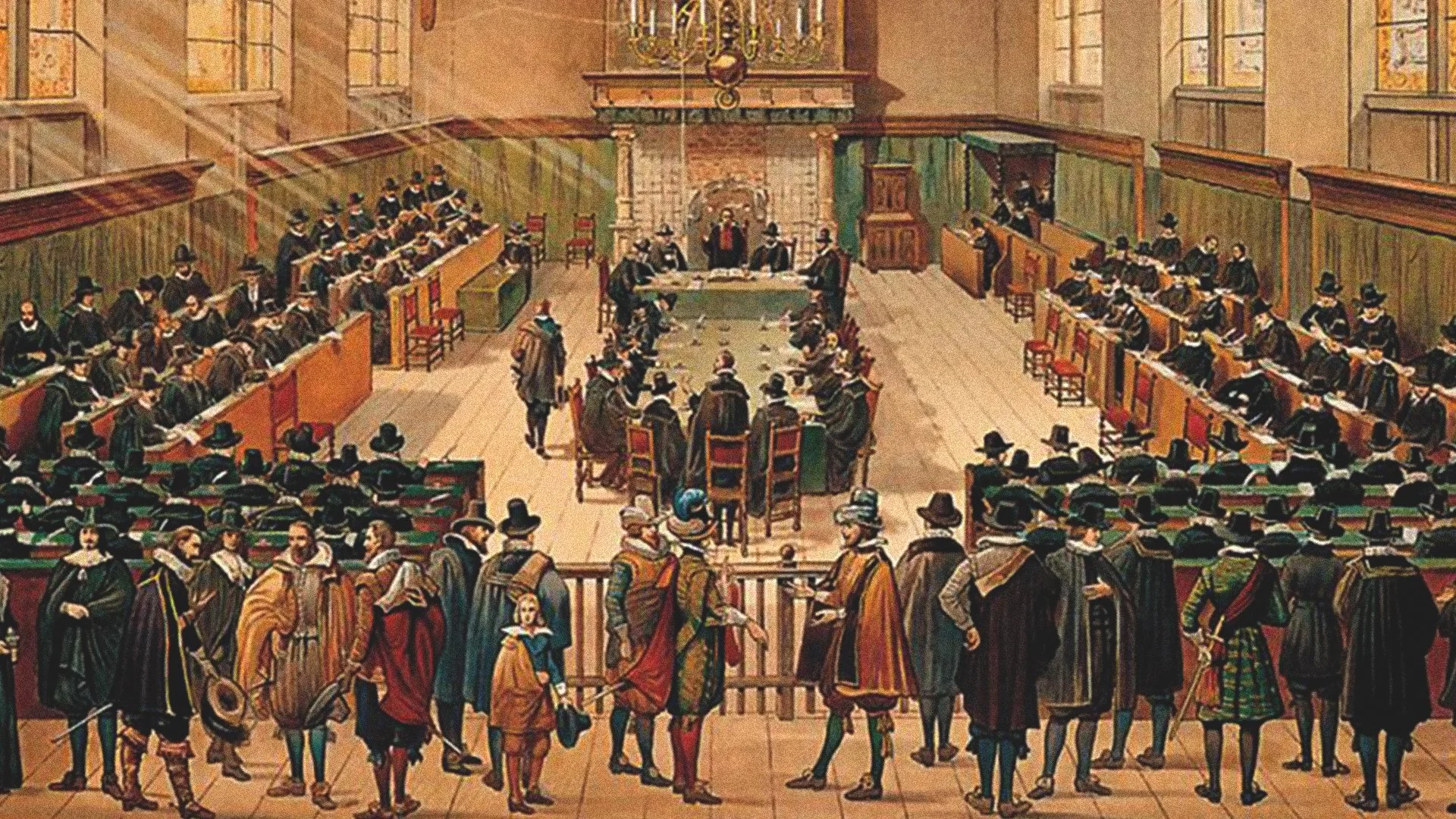
The cause for independence was taken up by William’s son Maurice of Orange, who proved an effective soldier and strategist. But a threat emerged from within. A group called the Remonstrants, who followed the teachings of one Jacobus Arminius, challenged the Reformed teachings regarding soteriology, or the doctrine of salvation. The Remonstrants allied themselves with certain magistrates in the country who proved sympathetic. Meanwhile, Maurice aligned himself with the divines who opposed the Remonstrants, and called for a national synod. The States-General (the parliamentary body) ordered the convening of such a synod in the city of Dordrecht in 1618. The Synod ultimately condemned the five points of the Remonstrants, publishing the Canons of Dort which refuted them in 1619. The Synod of Dort was monumental to the Dutch Reformed Church as it also led to the establishment of the Church Order of Dort (which serves as the basis of many Dutch Reformed church orders to this day) and commissioned the translation of God’s Word into the Dutch language. It was also monumental at the time, resolving much tension and division in the church and state.
The beginning of the 17th century is often marked as the start of the Dutch Further Reformation. There was a great concern over the worldliness that had crept into the church. The Lord greatly blessed the preaching and writings of several ministers and theologians in this period, who emphasized the need for experiential preaching, piety and holiness, and a turning away from sin and worldliness. These men included Willem Teellinck, Gijsbertus Voetius, Herman Witsius, Wilhelmus a Brakel, Jacobus Koelman, and Theodorus van der Groe. Collectively, they became affectionately known as the old writers, and their works have been and continue to be a blessing to many.
This period of time also saw the end of the Eighty-Years War, in 1648. Catholic Spain had been pushed back, and the Reformed in the Netherlands were free of the terrible persecution. The Lord had intervened mightily on behalf of His people.
French Influences, The Dutch Reveil, and The Secession of 1834
Towards the end of the 18th Century, the influence of the French Enlightenment and later Revolution made their way into the Netherlands. Rationalism and liberalism posed a major threat to the church in the Netherlands, and sadly many conformed to these new ideals. The Netherlands experienced its own Revolution in 1795, which was militarily supported by France and ultimately led to French invasion and occupation. Even after the defeat of Napoleon and the restoration of Dutch political independence, the influences of Enlightenment thinking still held a terrible grip on the church. But in these times there were yet those who opposed the principles of “Liberty, Equality, Fraternity” (a rallying cry for the French Revolutionaries) and wished to see the renewed reformation of the Dutch church. A movement, known as the Dutch Reveil, was led not by clergymen, but laymen, particularly Willem Bilderdijk, Isaac Da Costa, and Groen van Prinsterer. They vehemently opposed the false rationalism, egalitarianism, and liberalism of the Enlightenment, instead standing for orthodoxy, faith in and subjection to God, and a following of the teachings of Holy Scripture. Their writings and advocacy inspired others in their wake who sought to remain true to the Reformed Faith and confessions. Unfortunately, despite their advocacy, the Dutch Reformed Church was still weighed down by liberalism and increasing worldliness. The King of the Netherlands signed into law a new Church Order in 1816, which replaced the Reformed church polity with rule by an appointed administrative committee. This committee had little use for the tenets of the Reformed Faith, and their rules and orders made it increasingly difficult for faithful ministers and congregations to stay a part of the national church. The tension reached a breaking point with the suspension of Rev. Hendrick De Cock from the ministry, and the resulting decision of his consistory and congregation to separate from the national church. Together they signed the Act of Secession and Return, expressing their convictions that separation was necessary and their hope to reunite with the national church when faithfulness had returned. Persecution from the state followed, with De Cock and others suffering heavy fines and imprisonment, but as time went on more ministers and congregations left the national church and joined the growing Secession church. It is from the Succession church that we trace our roots.
From the Secession to Today
The Secession church experienced many trials, setbacks, disagreements, and difficulties in the years that followed, but the Lord’s faithfulness was known to them. The church was blessed with growth and spread from the Netherlands to North America and other places. When we examine the history of the church, we can find a great deal of comfort. We can see that the church has faced persecution, heresy, division, complacency, worldliness, liberalism, and all manner of conflict in the past, and by the Lord’s grace and faithfulness, has been preserved through it all. We can also see a warning that present orthodoxy and faithful preaching can easily become compromised with the passing of time, that complacency and encroaching worldliness must be steadily guarded against, and that the enemies of the church are always active. But we can look to the Lord, who remains our sure refuge, defense, and hope. His faithfulness and mercy to His people is great. We think of the closing words of Psalter 247: “O God, our help in ages past, Our hope for years to come, Be Thou our guard while troubles last, and our eternal home.”